Thyroid Disorder Treatment in Homeopathy
Understanding the Root Cause – From Endocrine Imbalance to Mind–Body Regulation
Thyroid disorders are among the most common endocrine conditions affecting millions of people worldwide. The thyroid gland plays a vital role in regulating metabolism, energy levels, hormonal balance, and many essential bodily functions.
When the thyroid gland becomes overactive or underactive, it can lead to a wide range of health problems such as fatigue, weight changes, mood disturbances, hair loss, menstrual irregularities, and metabolic disturbances.
Many patients rely on long-term hormone medications to manage thyroid disorders. While these medications help regulate hormone levels, they often do not address the deeper causes of thyroid dysfunction.
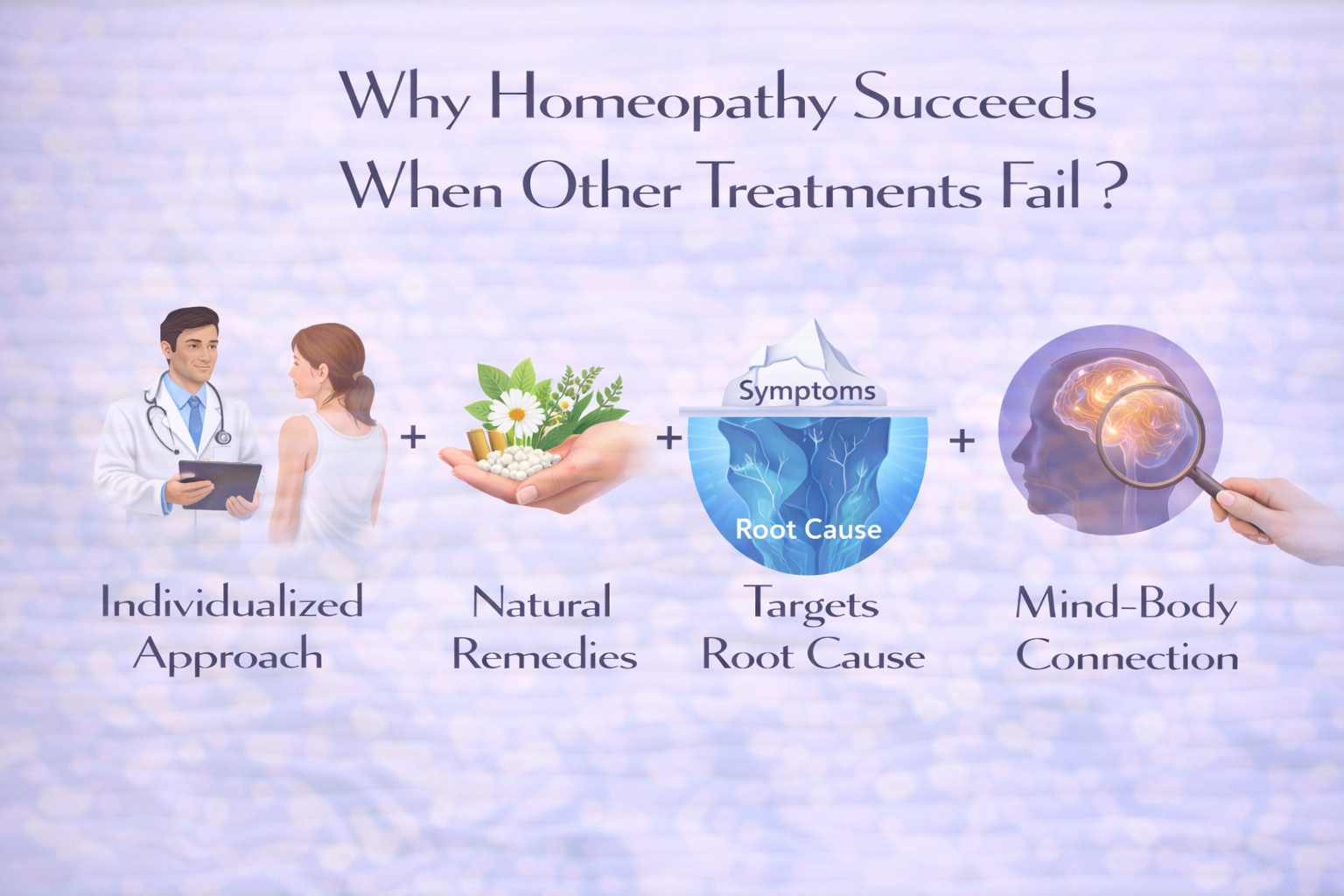
At HomeoConsulting, we approach thyroid disorders from a holistic perspective. Instead of focusing only on hormone levels, we analyze the entire disease process—from endocrine regulation and immune function to emotional stress and metabolic balance.
Homeopathy aims to restore the body’s natural regulatory mechanisms so that thyroid function gradually becomes more balanced.
Understanding the Thyroid Gland
The thyroid is a butterfly-shaped gland located in the front of the neck.
It produces hormones that regulate:
-
Metabolism
-
Body temperature
-
Energy production
-
Heart rate
-
Growth and development
The two main thyroid hormones are:
-
T3 (Triiodothyronine)
-
T4 (Thyroxine)
These hormones are regulated by the hypothalamus–pituitary–thyroid (HPT) axis, which controls hormone production through a feedback mechanism.
Types of Thyroid Disorders
Thyroid dysfunction can occur in several forms.
Hypothyroidism
This condition occurs when the thyroid gland produces insufficient thyroid hormones.
Common symptoms include:
-
Fatigue
-
Weight gain
-
Cold intolerance
-
Dry skin
-
Hair thinning
-
Depression
-
Slow metabolism
Hypothyroidism is commonly caused by autoimmune thyroiditis (Hashimoto’s disease).
Hyperthyroidism
Hyperthyroidism occurs when the thyroid gland produces excess thyroid hormones.
Symptoms may include:
-
Weight loss
-
Rapid heartbeat
-
Anxiety
-
Heat intolerance
-
Tremors
-
Excessive sweating
One common cause is Graves’ disease, an autoimmune disorder affecting the thyroid.
Thyroid Nodules
Some patients develop lumps or nodules in the thyroid gland.
These nodules may be benign but can sometimes affect hormone production.
Autoimmune Thyroid Disorders
Autoimmune diseases occur when the immune system mistakenly attacks thyroid tissues.
Examples include:
-
Hashimoto’s thyroiditis
-
Graves’ disease
These conditions involve immune dysregulation affecting the thyroid gland.
Pathophysiology of Thyroid Disorders
Thyroid dysfunction often develops due to complex interactions between endocrine regulation, immune responses, and metabolic factors.
1. Hormonal Feedback Disturbance
The thyroid gland is regulated by the HPT axis.
When this feedback system becomes disturbed, thyroid hormone levels may become abnormal.
2. Autoimmune Activity
In autoimmune thyroid disorders, the immune system produces antibodies that attack thyroid cells.
This may lead to either:
-
Reduced hormone production (Hashimoto’s)
-
Excess hormone production (Graves’ disease)
3. Metabolic Dysregulation
Thyroid hormones regulate metabolism at the cellular level.
When hormone levels become abnormal, it can affect:
-
Energy production
-
Body weight
-
Temperature regulation
-
Cardiovascular function
Common Causes of Thyroid Dysfunction
Several factors may contribute to thyroid disorders.
These include:
-
Genetic predisposition
-
Autoimmune disease
-
Chronic stress
-
Hormonal imbalance
-
Nutritional deficiencies
-
Environmental toxins
Understanding these causes helps guide effective treatment.
The Mind–Endocrine Connection
Emotional and psychological stress can strongly influence endocrine health.
Stress affects the hypothalamus and pituitary gland, which regulate hormone production.
Prolonged stress may disrupt hormonal balance and contribute to thyroid dysfunction.
Many patients with thyroid disorders report symptoms such as:
-
Anxiety
-
Emotional sensitivity
-
Chronic fatigue
-
Sleep disturbances
This mind–body connection plays an important role in the development and progression of endocrine disorders.
Homeopathic Understanding of Thyroid Disorders
In homeopathy, thyroid disorders are not viewed solely as glandular diseases.
Instead, they are considered manifestations of systemic imbalance involving endocrine regulation, immune function, metabolism, and emotional health.
Homeopathy evaluates the patient holistically by examining:
-
Hormonal symptoms
-
Metabolic patterns
-
Emotional temperament
-
Digestive health
-
Lifestyle habits
-
Family history
Each patient’s disease pattern is unique, and therefore treatment must be individualized.
How We Analyze Thyroid Cases at HomeoConsulting
At HomeoConsulting, thyroid treatment begins with a comprehensive case evaluation.
1. Hormonal Assessment
We review medical reports such as:
-
TSH
-
T3
-
T4
-
Thyroid antibodies
These tests help understand the functional status of the thyroid gland.
2. Metabolic and Physical Symptoms
We evaluate symptoms such as:
-
Weight changes
-
Hair loss
-
Skin changes
-
Energy levels
-
Temperature sensitivity
These symptoms provide important clues about metabolic disturbances.
3. Mental and Emotional Evaluation
Homeopathy gives special importance to mental symptoms.
We evaluate:
-
Emotional temperament
-
Stress response
-
Anxiety patterns
-
Lifestyle habits
These factors help identify the constitutional remedy.
Homeopathic Treatment for Thyroid Disorders
Homeopathic treatment aims to restore balance in the body’s endocrine and immune systems.
The selected remedy may help:
-
Regulate thyroid hormone balance
-
Improve metabolic function
-
Reduce autoimmune activity
-
Improve overall energy and vitality
Because homeopathy treats the individual rather than the disease alone, remedies are selected according to the patient’s complete symptom profile.
Benefits of Homeopathic Treatment
Patients undergoing homeopathic treatment for thyroid disorders often experience:
-
Improved energy levels
-
Better metabolic balance
-
Reduced fatigue
-
Improved emotional well-being
-
Overall improvement in quality of life
Homeopathic medicines are gentle and safe for long-term use.
Our Holistic Treatment Approach
At HomeoConsulting, thyroid treatment focuses on comprehensive healing.
Our approach includes:
-
Detailed case analysis
-
Hormonal and metabolic evaluation
-
Individualized homeopathic remedy selection
-
Lifestyle and stress management guidance
-
Long-term monitoring and follow-up
The goal is to restore balance within the endocrine system so that natural hormonal regulation improves gradually.
Begin Your Journey Toward Hormonal Balance
Thyroid disorders can significantly affect overall health and well-being. However, by addressing the deeper causes of endocrine imbalance, long-term improvement is possible.
Homeopathy offers a natural and holistic treatment strategy that supports the body’s own healing mechanisms.
If you are experiencing thyroid-related symptoms, the team at HomeoConsulting can help you explore a personalized treatment plan designed to restore hormonal balance naturally.